Hello, I liked the bit in your blog post when you talked about inclusivity. I agree that inclusivity goes beyond cultural representation. Incorporating inclusivity in the classroom allows for all students to feel seen and heard, it is also a great way to promote better engagement and motivation among students. When students can connect to the material they are learning they are more likely to actually remember the material. I know for myself, if I can personally relate to a topic I am more likely to understand and remember the information. Being in political science I try to relate as much as I can to everything around me so its easier to digest.
Author: Alexandra
Hey Sasha, I enjoyed reading your blog post. I totally understand when you talk about synchronous vs asynchronous learning and how with asynchronous, you can sometimes forget what you need to do. It is easy to remember what is due when you are in person in class because you are reminded and since you have to be present in the class you are more likely to remember things that are due. With online classes you may miss a lecture or forgot to read something and it can totally slip your mind. Personally with being full time in school I find it hard to remember everything in all my classes. I like that you print out all you syllabuses and have reminders on your phone that is very helpful. Online vs in person has its advantages like you said the freedom to move at your own pace and have a flexible schedule can be beneficial to some students. If you are unable to get to a recording in the morning you have the option to do it later in the day which can eliminate stress. Thanks for the post hope your semester is going well!
Hey Max, I enjoyed reading your week 2 blog post. I totally agree that learning styles are not one size fits all and everyone learns in their own way. I think that learning styles are evolving and teachers are also becoming more accommodating in the classroom. I liked the carnival game you came up with and the strategy behind it. I can appreciate the time that went into coming up with the balloon idea and also executing it in a way that was user-friendly.
I can totally relate to you in your first 2 years of university, also, it took me forever to declare a program, and I always felt unsure with what I wanted to do. When it came to note taking I would get anxiety if i was not able to write everything the prof was saying, and it took me quite a while to write out proper notes that were helpful to me. Creating a learning design plan that worked for me took work and it wasn’t until I took edci 338 that I learned about personalized learning plans and how I could implement that into my studies.
Great blog post and good luck with the rest of your semester!
Universal design for Learning
Universal design for learning is a framework that encourages teachers to put strategies in place for students before they start to struggle. Students all learn in different ways and this technique allows for students to be successful the first time around. As a student myself it can be discouraging when a learning style doesn’t work for me. The three guiding principles for this framework are. Multiple means of representation, Multiple means of action and expression, and Multiple means of engagement. These are the “what” “why” and “how” of learning.
In one of my first semesters here at UVIC, I took a class, and the entire grading portion for the class was four tests. Test-taking is not my strong suit when it comes to ways of learning, and although I did fine on the tests, the professor gave the class the option to do an assignment instead of a final test. This falls into the category of “Multiple means of engagement” Instead of a test the class was given a different option that you could choose to do. I found this to be helpful and I felt more confident in my final assignment when I handed it in.
It can be difficult for university professors to accommodate all types of learning styles, especially with the large classroom sizes. Ultimately, when students arrive at university, they must determine which learning style best suits them and should advocate for themselves to receive the support they need. UVIC has many resources that students and benefit from and can help student’s be successful in their education journey.
Below, I have attached a link to Student Services, CAL, and Wellness/Counseling. These are all resources at UVIC that help students plan and organize throughout their semesters. For example, with CAL, you are able to create an educational plan that best suits your style of learning.

https://www.uvic.ca/accessible-learning/instructors/exam-centre/index.php
https://www.uvic.ca/students/health-wellness/counselling/index.php
Synchronous and Asynchronous Learning
Synchronous and Asynchronous learning have always been an interesting topic for me. When I was in high-school I struggled with online courses and was unsuccessful but as I got into university I was forced into adapting to it. I started university around the same time COVID happened and so all my courses naturally went online. I was concerned at the start but after a while I started to enjoy asynchronous learning and every semester I try and take one online course. It was a learning style that I had to adopt into my education but it has been beneficial. Having a mix of both online and in person classes have added a level of diversity to my learning strategies and I have found ways to learn better through that.
In 2024 I travelled Europe for three months was still enrolled at UVIC and maintained my grades. The asynchronous style was easy to adopt and I was still able to be successful in my studies while online. School is school and wether it is online or in person you have to carve out time in your day dedicated to the class, and thats what helped me when it came to online class
Interaction and Presence
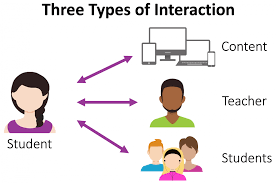
It can be hard to foster relationships in an online setting, but I have found ways to do so. I have noticed many online classes require group work, and I think this is a great way to stay connected and be held accountable. It can be hard to meet up with group members especially with navigating everyones busy schedules but if you have a group with willing members it is all the much easier. Open communication in an online setting is the most important part of success, asking questions when you are confused and taking advantage of the professors office hours even if it is just to have a quick conversation it gives the chance for you as the student and the professor to create a relationship.
I resonated a lot with Amy’s intro blog post. I was also diagnosed with ADHD and had trouble staying motivated throughout my education. School becomes significantly “easier” when you are invested/interested in the topic you are learning about. When I started university my mind set also shifted, different things become and priority, the mental shift towards school can sometimes take a-lot of intentionally work. One thing that shifted the way I think is that not everyday has to be a good day. It sounds so random but if there were days where I was lazy or did not do my school work or would read books that did not have to do with my classes I would start to feel guilty and it would set me back. After having that mind shift I am able to recognize that I am human and life gets busy. This has also help me stress significantly less when it comes to school. Thanks so much for your response, I am excited to work together this semester!
Hey Sophia, I enjoyed reading you first blog post and I think you bring up really points. I liked your added video on motivation and thought it provided good insight. Motivation can be really hard to gain especially if you are not feeling well mentally or physically, intrinsic versus extrinsic was new to me and I had not heard about it before. Intrinsic motivation is easy to accomplish and sometimes you might not think twice about it but extrinsic motivation is where people like myself tend to struggle. School is a great example of intrinsic and extrinsic motivation. If you are just living through the motions of school and tend to be slightly disengaged you are displaying signs of extrinsic motivation but if you are studying a topic you are interested in and you are well engaged you are displaying intrinsic motivation. Throughout a degree program students display both types of motivation which can sometimes cause the over justification effect, this was new to me because I had assumed for so long that as long as you had some type of motivation getting you through the days then you would be fine. Motivation is complicated and it honestly comes down to what works for you works for you. Thanks for sharing the video I found it interesting!
Backward Design and Learning Outcomes
The concept of backwards learning can be beneficial to many students. It helps students grasp a general knowledge for what they are about to learn and encourages students to say organized and on task. Personally for myself, I like the idea of backwards learning because I am able to organize my notes and I feel prepared for what is to come next. An example of backwards learning in my education is through a course syllabus. Everything I will be learning throughout a semester is given out of the the first day of the class with dates of when assignments will be due and what weeks I have to complete certain readings. Every semester I take all my courses outlines and I write them out on a large calendar so I can visualize everything from all my classes. Having an end goal is beneficial to my learning style because it gives me something to work towards and to look forward to. The middle to end of the semester can be a hard time for students and knowing that there is a light at the end of the tunnel is always helpful to see, especially if you know what those work entail content wise. Having a detailed plan of a learning outcome or goal also helps builds confidence and motives students to successfully achieve those goals.

Surface vs Deep learning
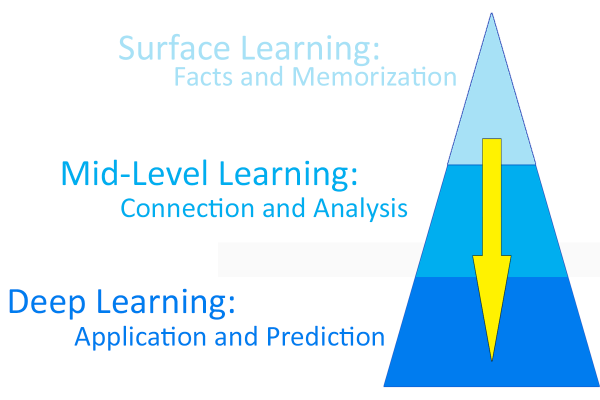
When I was in high school the my personalized learning took a surface approach. Many of the test were memory-based and I did not find I was fully retaining the information I was learning. Although memoization has its benefits to the brain I felt that I would spend weeks before test memoizing definitions instead of truly understanding what the definitions meant. A deep approach to learning is taking the next step to comprehend and understand what those definitions mean.
I had a conversation with a friend who is taking a Finance degree, and she said something that made me think about surface and deep learning. She said, “I don’t need to know what’s going on in the class, I just need to know how to do the math.” To me, that concept made no sense because for my personalized learning style I need to know the detailed steps on how understand and outcome but for other people they just need to be able to memorize the basics. This also is an example of how people have different learning styles and what works for one person wont be the same for another person.
Inquiry-Based and Project-Based Learning
Inquiry-based learning encourages students to learn through questions and scenarios. This involves students digging deeper into a topic, either through research or experiments ect. This method of learning not only prompts curiosity but also helps develop research skills. An example of this through my education is through history classes, many times I have been given prompts what read “How did a particular situation have an effect on a community”. Through this question I was encourage to make a time-line like description of certain events and how the community was effected, not only does this answer the main question but also is a form of deeper research on the topic.
Project-based learning is a style of learning that involves a long, singular project. A good example of this is when professors assign a project at the start of the semester, and a student is required to hand in rough drafts periodically before they hand in the final assignment at the end of the semester. Almost like an ongoing tangible assignment.
Blooms Taxonomy
I found this short 5-minute explanation video on Bloom’s Taxonomy on YouTube to be extremely informative and broke down the concepts easily. Although Josh’s video was very informative and helpful, I also thought this source could be beneficial.
Introduction
Hello!
My name is Alexandra and I am in my fourth year of Political Science at UVIC. My education journey has been very interesting to say the least. After graduating from high school, I started my post-secondary endeavours at Mount Royal University in Calgary. During my first year COVID happened and I took the winter semester off, the winter semester turned into 1 year and I then found myself at the University of Victoria in 2021. I am looking forward to my last year of school and I am excited for my future after university.
Understanding Learning
My most successful style of learning when it comes to school and life in general is visually. When I am able to see concepts and talk them out with peers, I am able to grasp them much faster than just hearing someone talk.
I define learning as an opportunity to gain knowledge and deepen your understanding of concepts. As a young child I categorized knowledge into two categories: street smarts and book smarts. Now that I am older I have a way different perspective on learning and knowledge. I value the education I am getting in school but I also value life skills.
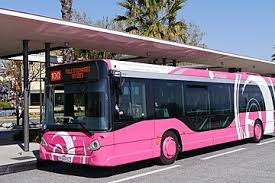
A time that I learned something effectively was the train/bus system while living in the south of France. Anyone who has travelled knows the struggle of going to a different country and navigating around, especially in a different language. That was a learning challenge for me because not only are all the bus app systems in French the busses just like In Canada can switch routes at a certain point. The most effective way I found learning this system was through trial and error and asking questions. I would often get on the wrong bus or miss my stop but once I figured out the colour coded system I was able to grasp their system. I would also ask my friends in France to explain or translate bus routes and transfer system from french to english which was also really helpful. It only took me a few weeks to fully understand and I was quite happy with myself once I figured it out. Much like Canada bus drivers in France would drive their similar routes which also verified I was on the right bus when I saw a familiar face.