Category: Weekly Reflection

Blog post #5

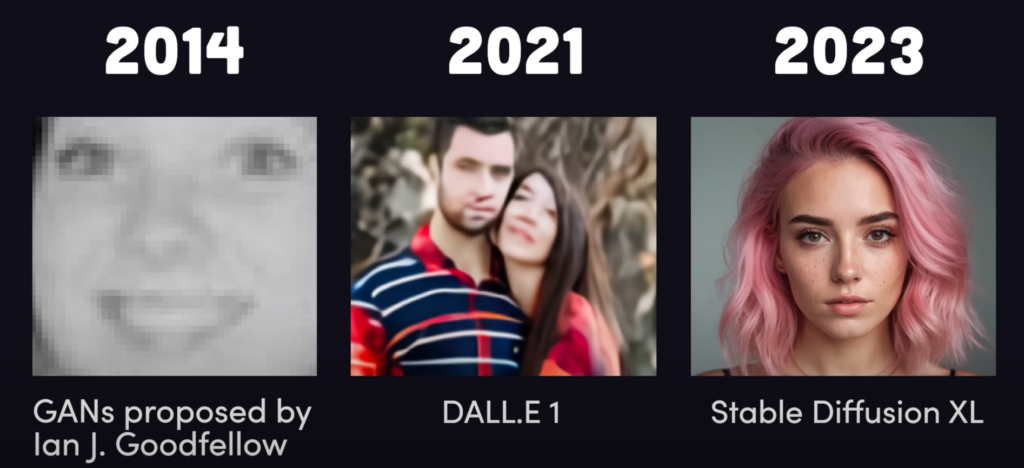
In our pods we talked about what personal learning networks are and how they can sometimes be misused. A personal learning network is a group of people that gather via social media to exchanges ideas together in a way that is visible to the public. Some examples are social media platforms like LinkdIn, websites or blogs and even discords. These are all public platforms that anyone can view and openly discuss while interaction with others. While these platforms can be very helpful they can also be misused in several ways. One of the biggest ways that personal leaning networks can be miscued is through spreading misinformation. Ai videos have been a large factor of false information being spread. When Ai videos first started circling around it was very obvious, they were fake but more recently the videos have been looking a little too real. Before the images looked extremally warped and very obviously unrealist. Ai videos now have the potently to replace one persona face with another persona face without any obvious flaws, this can lead to someone be accused of something they never actually said. Something I have also noticed in my degree (Political Science) is that politicians speeches can be edited to it looks and sounds like they are saying something completely different than what they are actually saying.

The image below shows a good representation on how Ai has evolved throughout the years. I was introduced to Ai in 2019 by the family I was nannying for, at the time I was 18 and I had literally no idea what they were talking about. I remember how convinced they were that Ai was going to take over the world and I thought they were absolutely out to lunch but I think back now that they might have been onto something.
Another common misuse of personal learning networks is cyberbullying and negative interactions. Cyberbullying has always been around, but it has become significantly worse in the last five years especially during and after covid. Social media has been known to have a huge impact on people’s brains and especially people’s mental health. Research has shown that excessive social media use can increase anxiety and depression, lower self-esteem and distorts people’s perception of the world. In 2025 Australian banned social media for users under 16 and Canada is not far behind from doing the same thing.

Is Canada’s teen social media ban constitutional? It’s complicated
Blog post #4

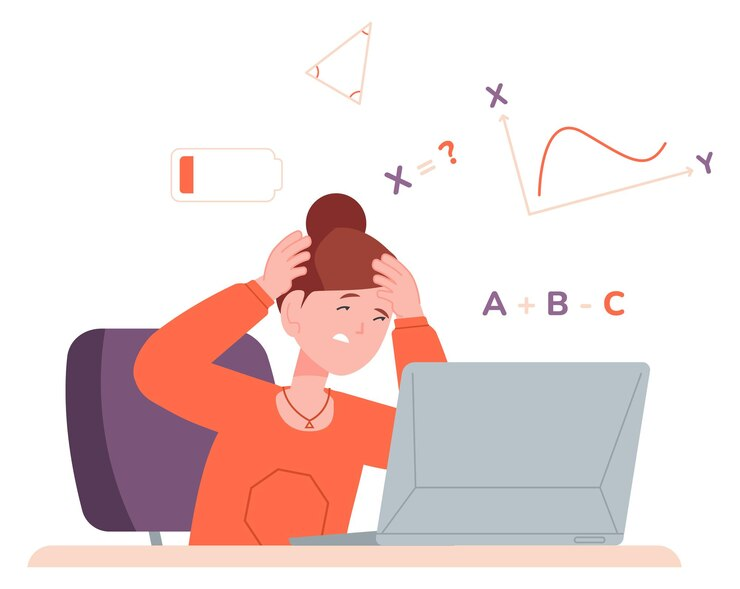
In this week’s class we discussed educational assessments. Educational assessment is the process teachers use to see what students know, can just do or have become a result of learning. Something that stuck out to me during this class was the zone of proximal development which is the inability to do something even with help, that is how I feel about math.

Educational assessments consist of three components: Domain (what should be learned), Observation (how do we gather evidence), Interpretation (what does the evidence mean).

In the “Power of feedback” article I was interested in the single-loop and double-loop learning. Single-loop learning happens when a student uses feedback to correct a problem or improve their work on a specific task. The student may change how they complete a task, but this does not mean it changes how the student thinks moving forward in future assignments. An example I can think of in my own education would be when I was given an answer key for practice tests after I took them, I would look at the answer key see where I went wrong think I understood where I went wrong but I would continue to make the same mistake because I was not actively retaining information, I was just looking at the answer key. Another example would be when I would just memorize information, I was not retaining or understand I was just simply memorizing. I would do this a lot in high school and although it worked then, it caught up to me in university.

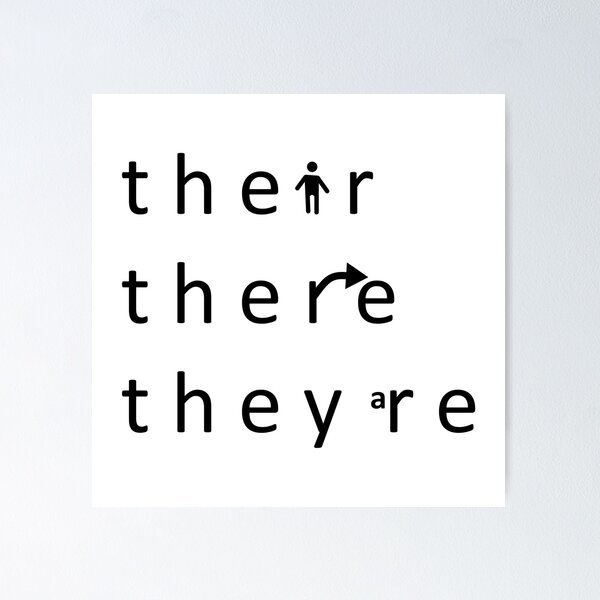
On the other hand, double loop learning goes beyond, students at this point meaningfully reflect and review their previous approaches towards a topic. This leads to an actual change in the way a student’s thinks and works. It is not about improving a singular assignment but how to improve all future assignments. An example in my education would when I was younger and my mom explained the differences between there, their and they’re, although this wasn’t an assignment it significantly changed the way I write grammatically and the lesson has stuck with me ever since.

I view single loop learning as surface level leaning and double loop leaning as deep learning. Double loop learning is done through reflection, feedback and interaction with others. At times it can be really difficult for students because they may feel as though they can’t grasp the topic or that it will be impossible but with consists of work and establishing good habits the work can be done.

References

Hattie, J., & Timperley, H. (2007). The power of feedback. Review of Educational Research, 77, 81–112.

Blog post #3

This week we had the honor of having Dr. Valerie Irvine guest speak our lecture. She spoke about digital learning and the concept of multi-access learning. This made me think about my personal education journey with online learning. Like Dr. Irvine said online learning did not start when covid began but it definitely became more valuable at this time. I recall the first time I experienced an online class it was a fully online course that was a do-it-yourself pace with no online class component’s when I was in high school in 2018. I remember having a negative experience and never wanted to do online learning again. At the time I did not have the self-restrictions to be successful in a self-pace course. When covid happened, I opted out for the winter semester of university hoping that it would only be a short period of time I would be out of school. As we all know covid restrictions got more intense and I was eventually forced to adapt to an online learning setting.

Multi-Access learning

Multi-Access learning was my first expense with online learning since I was in high school. Because of my previous experience with online learning, I was hesitant, but I found it to be successful for me. Obviously with covid students were unable to meet in person so because of that professors and teachers resorted to online apps like zoom and google classroom. Before this experience I had never enjoyed online learning and though I could never be successful at it but because I was able to meet with my professor and classmates over zoom I felt that there was less barriers when it came to my education.

Dr. Irvine argues that the term “blended learning” is an incorrect term because courses can sometimes blur the distinction between online and face to face learning. She promotes the concept of multi-access learning because students have access different learning experiences through different avenues. Some attributes of multi access learning that I find helpful are synchronous online participation and asynchronous online activities. This means having mandatory online class meetings at specific times but access to complete online assignments at any point. Throughout my degree, after covid I still continued to take an online class each semester, and I was just as successful as I would be in the traditional classroom. I think that multi-access learning is a great educational tool and it still helps keeps students engaged and on top of their work.

Week 2- Reflection Post

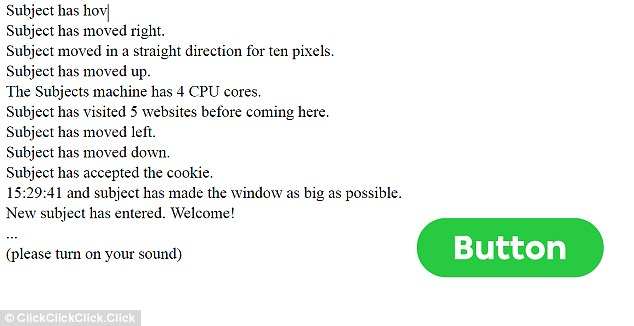
This week in class we focused on the kind of data that we leave behind on browsers, apps and websites. We looked through different sites the first one was “clickclickclick”, this site demonstrates truly how much information websites can learn about you and your behaviour. As you interact with the website the site starts narrating and observing your interactions. For example how fast you move you mouse or how often you click the button. The point of this website is to show users that everything they do online companies use to build profiles about them. After interacting with the app I originally thought it was interesting but after a while I found it slightly creepy how much can be gathered from ordinary actions.

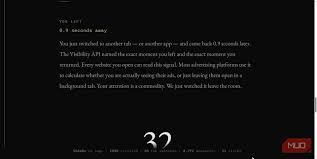
The next website I explored was “Since you Arrived” this website browser reveals where you are, when you arrived, what you brought with you, what renders your world, battery %, what language you speak, what you carry, what you allow on your computer, the site you were last one, how many times you switched tabs. This site shows 36 data points which means that it has collected 36 distinct pieces of information about your online behaviour. On their own, this information is not very helpful to identifying things but when they are all combined they form a browser fingerprint tailored to the user. This was a very interesting but creepy browser, I could not believe how much of my information they had just within the first 5 seconds of being on the site.

The last website I checked out was “Privacy.net”. This website had 5 different categories of information to look through. At first it was very similar to “Since you Arrived” it started out telling me my location, my IP address, what my laptop is running and my battery %. This site shows how much information your browser exposes and the goal is that the user understands the privacy risks. The fingerprint analysis seemed to be the most important but I found it to be extremely clunky, the gist of what I gathered was that even though you might block cookies your unique fingerprint can still at times be used to recognize your path.I did I find out that 0.00% of observed browsers run Mac 10.15 which I found funny because I am currently running Mac 10.15.

Lastly we looked through Google Maps, I have used google maps and I was familiar with the timeline it creates of the places someone visits. I always thought this history was useful especially because it keeps track of everything. On the other end it is creepy how it saves and holds onto data.

Week 1

How we learn

Students learn in so many different ways, Mayers Cognitive Theory of Multimedia Learning is the combination of words and pictures and how people learn more effectively through this method. This is something I personally resonate with. I always say that I am a visual learner and that I learn best when I see information rather than just hearing it.

The three core principles are dual coding theory, limited capacity principle and active processing principle.

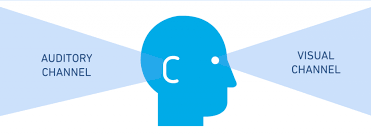
Words and pictures are processed through different systems, the brain has separate but connected systems for verbal and visual information. For example someone explaining how to draw a square, the explanation process is through the verbal system and the end result photo is processed throughout the visual system in the brain.

Leaning is an active process, when you watch a video, read a book, or listen to a lecture your brain selects what information seems important, it organizes the information into meaningful areas and it integrates the information with previous knowledge.

Your memory can only process a small amount of information at once, your brain is like a book shelf, if you put too many books on the shelf it will collapse. This is the same when students are given too much information, they become overwhelmed and their learning slows down. Students have a limited capacity as to what they can take in and it should be organized carefully.

© 2026 Alexandra Sarro

Theme by Anders NorenUp ↑